
The Role of Digital Accessibility in Ensuring Everyone Can Access Critical Health Resources Without Frustration
Introduction
In an increasingly connected world, the way people access healthcare has undergone a profound transformation. What once required physical visits, paper records, and long waiting times can now often be managed with a few clicks or taps. From booking medical appointments to accessing test results and consulting specialists, digital platforms have become a central part of modern healthcare delivery. However, while these advancements have made healthcare more convenient for many, they have also unintentionally created new barriers for others.
Digital accessibility plays a critical role in ensuring that healthcare services remain inclusive, equitable, and truly effective for everyone. It is not merely about making websites look appealing or function smoothly; it is about designing systems that accommodate the diverse needs of individuals, including those with disabilities, older adults, people with limited digital literacy, and individuals living in underserved areas. Without proper accessibility measures, even the most advanced digital health tools can become sources of frustration, confusion, and exclusion.
This article explores the importance of digital accessibility in healthcare in depth, examining the challenges users face, the impact of inclusive design on patient outcomes, and the practical strategies organizations can implement to create more accessible and user-friendly digital health experiences.
Understanding Digital Accessibility in Healthcare
Digital accessibility in healthcare refers to the practice of designing and developing digital platforms in a way that allows all individuals to access, understand, and interact with health-related information and services effectively. This includes websites, mobile applications, patient portals, telemedicine systems, and any other digital interface that plays a role in delivering healthcare services.
Why Accessibility is Essential in the Healthcare Context
Healthcare is fundamentally different from many other industries because it directly affects people's well-being, safety, and quality of life. When individuals seek medical information or services, they are often in a vulnerable state, experiencing stress, uncertainty, or even urgency. In such situations, encountering digital barriers can significantly worsen their experience and potentially delay critical care.
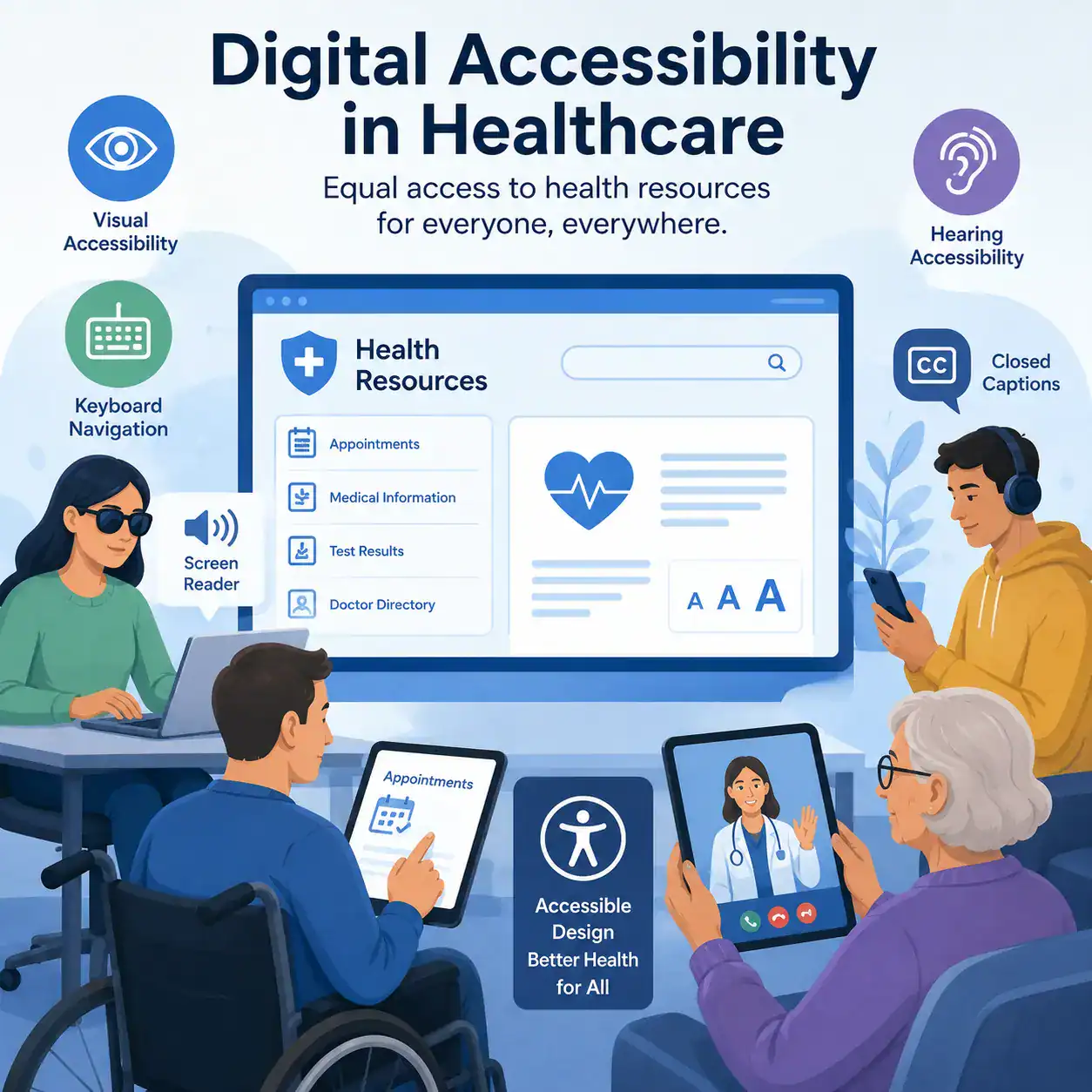
For instance, a person with visual impairment may rely on screen reading software to access online information. If a healthcare website lacks proper coding or alternative text descriptions for images, that individual may struggle to understand important medical instructions. Similarly, a patient with limited mobility may depend on keyboard navigation instead of a mouse. If the platform is not designed to support this interaction, completing essential tasks such as booking an appointment can become unnecessarily difficult.
Moreover, accessibility is not limited to individuals with permanent disabilities. Temporary conditions, such as injuries or illnesses, can also affect how people interact with digital platforms. Even situational factors, such as using a mobile device in a noisy or low light environment, can create accessibility challenges. Therefore, designing for accessibility ultimately benefits a much broader audience than many organizations initially realize.
Core Principles of Digital Accessibility
Accessible healthcare platforms are typically built around four key principles that ensure usability for all users. These principles guide designers and developers in creating inclusive digital experiences.
- Perceivable: Information must be presented in ways that users can recognize and interpret. This includes providing text alternatives for images, ensuring sufficient color contrast, and offering captions for multimedia content.
- Operable: Users must be able to navigate and interact with the interface using various input methods, including keyboards, touchscreens, and assistive technologies.
- Understandable: Content and navigation should be clear, predictable, and easy to follow. This is particularly important in healthcare, where complex terminology can already be overwhelming.
- Robust: Digital systems should function reliably across different devices, browsers, and assistive tools, ensuring consistent access for all users.
When these principles are applied thoughtfully, they create a foundation for a more inclusive and effective healthcare experience.
Common Barriers to Accessing Digital Health Resources
Despite growing awareness of accessibility, many healthcare platforms still present significant challenges for users. These barriers often stem from a lack of understanding, insufficient testing, or prioritization of aesthetics over functionality.
Poorly Structured and Overwhelming Interfaces
One of the most common issues users’ encounters is poorly designed websites that are cluttered, confusing, or difficult to navigate. Healthcare platforms often contain large amounts of information, but when this content is not organized effectively, users may struggle to find what they need. Small font sizes, low contrast color schemes, and inconsistent layouts can further exacerbate the problem, particularly for individuals with visual impairments.
Limited Compatibility with Assistive Technologies
Assistive technologies such as screen readers, speech recognition software, and alternative input devices are essential tools for many individuals. However, if digital platforms are not developed with these technologies in mind, users may find themselves unable to access key features. For example, forms that lack proper labels or buttons that are not clearly defined can make it nearly impossible for assistive tools to interpret the content correctly.
Complex and Technical Language
Healthcare information is often presented in highly technical language that can be difficult for the average user to understand. This creates a significant barrier for individuals with lower literacy levels, non-native speakers, or those who are already overwhelmed by their medical situation. When users cannot fully comprehend the information provided, they may make uninformed decisions or avoid seeking care altogether.
Inadequate Mobile Experience
With the increasing reliance on smartphones, mobile accessibility has become more important than ever. Many users access healthcare services exclusively through mobile devices, particularly in regions where desktop access is limited. If a website or application is not optimized for smaller screens, users may face issues such as distorted layouts, difficult navigation, and slow loading times.
Challenges in Telehealth Platforms
Telehealth has revolutionized access to care, but it also presents unique accessibility challenges. Issues such as poor audio quality, lack of subtitles, and confusing user interfaces can hinder effective communication between patients and healthcare providers. For individuals who rely on visual or auditory support, these limitations can significantly impact their ability to receive proper care.
The Impact of Accessibility on Patient Experience and Outcomes
Investing in digital accessibility is not simply about removing obstacles, it has a direct and measurable impact on patient experience, engagement, and overall health outcomes.
Enhancing User Confidence and Reducing Anxiety
When healthcare platforms are intuitive and easy to use, patients feel more confident in their ability to manage their health. Clear navigation, readable content, and responsive design reduce the frustration often associated with digital interactions. This is particularly important for individuals who may already be experiencing stress due to health concerns.
Encouraging Active Participation in Healthcare
Accessible platforms empower patients to take a more active role in their healthcare journey. Features such as simplified dashboards, personalized recommendations, and easy access to medical records encourage users to stay informed and engaged. This proactive approach can lead to better adherence to treatment plans and improved long-term outcomes.
Expanding Access to Underserved Communities
Digital accessibility also plays a crucial role in reaching populations that may otherwise face barriers to traditional healthcare services. Individuals living in remote areas, those with mobility limitations, and people with demanding schedules can benefit greatly from accessible digital solutions. For example, access to a virtual psychiatrist allows individuals to receive mental health support from the comfort of their own homes, eliminating the need for travel and reducing stigma associated with in person visits.
Strengthening Trust and Inclusivity
When healthcare organizations prioritize accessibility, they demonstrate a commitment to inclusivity and patient centered care. This builds trust among users and enhances the organization’s reputation. Patients are more likely to engage with and recommend services that are easy to use and considerate of their needs.
Strategies for Creating Accessible Digital Health Platforms
Developing accessible healthcare platforms requires a comprehensive and proactive approach that integrates accessibility into every stage of the design and development process.
Adopting an Inclusive Design Mindset
Accessibility should not be treated as an afterthought or a compliance requirement. Instead, it should be a fundamental aspect of the design process. This involves considering the needs of diverse users from the outset and incorporating features that enhance usability for everyone.
Prioritizing Clear and Simple Communication
Effective communication is essential in healthcare. Content should be written in plain language, avoiding unnecessary jargon and complex terminology. Breaking information into smaller sections, using descriptive headings, and incorporating visual aids can significantly improve comprehension.
Ensuring Compatibility with Assistive Tools
Developers must ensure that digital platforms are fully compatible with assistive technologies. This includes providing proper labels for form fields, enabling keyboard navigation, and using semantic coding practices that allow screen readers to interpret content accurately.
Optimizing for Mobile Accessibility
Responsive design is critical for ensuring a seamless experience across devices. This includes adjusting layouts for different screen sizes, ensuring touch friendly navigation, and optimizing performance for faster loading times.
Enhancing Multimedia Accessibility
Multimedia content should be accessible to all users. This means providing captions for videos, transcripts for audio content, and ensuring that visual elements are clearly described. These features not only support users with disabilities but also improve the overall user experience.
Conducting Regular Testing and Updates
Accessibility is an ongoing process that requires continuous evaluation and improvement. Regular audits, user testing, and feedback collection can help identify areas for enhancement and ensure that platforms remain inclusive over time.
The Future of Accessible Digital Healthcare
As technology continues to evolve, new opportunities are emerging to enhance accessibility in healthcare. Innovations such as artificial intelligence, voice interfaces, and wearable devices are transforming the way people interact with digital health platforms.
Artificial intelligence has the potential to personalize user experiences, adapting interfaces to individual needs and preferences. Voice technology enables hands free interaction, making it easier for users with mobility challenges to access information. Wearable devices provide real time health insights, empowering users to take control of their well-being.
These advancements, when combined with a strong commitment to accessibility, can create a healthcare ecosystem that is truly inclusive and responsive to the needs of all individuals.
Conclusion
Digital accessibility is a cornerstone of modern healthcare, ensuring that all individuals can access critical resources without unnecessary barriers or frustration. By prioritizing inclusive design, healthcare organizations can create platforms that are not only functional but also empowering and supportive.
The benefits of accessibility extend far beyond compliance, they enhance patient satisfaction, improve health outcomes, and expand access to care for underserved populations. In a world where digital interactions are becoming the norm, ensuring accessibility is both a responsibility and an opportunity.