
Why Every Travel and Trip Website Needs a Modern Design to Attract Global Tourists
Introduction
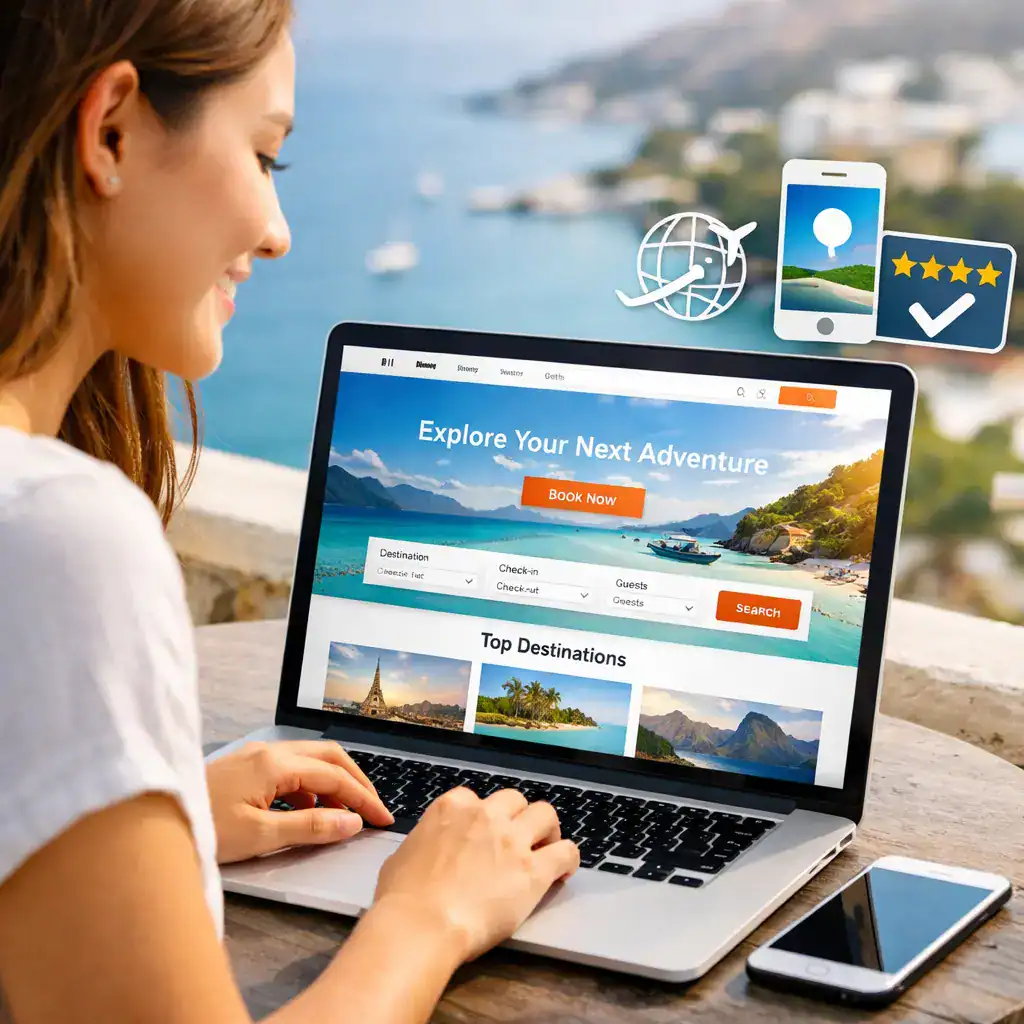
The travel industry has changed more in the last decade than in the previous fifty years combined. Tourists no longer walk into a physical agency, flip through brochures, and book a trip based on a friendly conversation with an agent. Today, the entire journey, from dreaming about a destination to booking flights, hotels, and tours, happens online. This means the first true "handshake" between a travel company and a potential traveler is not a smile at a counter; it is a modern travel website design that makes a strong first impression.
A travel website is often the single most important asset a tourism business owns. It is open twenty four hours a day, it never calls in sick, and it is the first thing a curious traveler in another country sees when they search for their next adventure. Yet many travel and trip websites are still stuck in the past: cluttered layouts, slow loading times, outdated images, and confusing navigation. In a world where attention spans are shrinking and competition is only a click away, an outdated website is not just an inconvenience; it is a silent business killer.
This article explores why modern web design has become non-negotiable for travel businesses that want to attract tourists from across the globe, and how thoughtful design choices translate directly into bookings, trust, and long term growth.
1. First Impressions Happen in Seconds, Not Minutes
Research on user behavior consistently shows that visitors form an opinion about a website within a few seconds of landing on it. For a travel business, this is a make or break moment. A tourist browsing from another country, comparing five or six different operators at once, will not wait around for a slow, disorganized site to load. They will simply close the tab and move to the next option.
A modern travel website solves this problem through clean visual hierarchy, fast loading speed, and intuitive structure. When a visitor lands on the homepage, they should immediately understand three things: what the company offers, who it serves, and how to take the next step. This clarity builds instant credibility. A traveler thinking about booking an international trip is placing trust, and often a significant amount of money, into a brand they have likely never interacted with before. A polished, professional design signals that the company is legitimate, organized, and capable of delivering on its promises.
Consider the difference between two websites offering similar services, for example two companies both offering guided hiking experiences or scenic new zealand tours. One site has a fast, elegant homepage with a striking hero image, clear pricing, and a simple booking button. The other has small fonts, mismatched colors, and a navigation menu that takes three clicks to find basic information. Even if both companies offer an identical product, the visitor will almost always trust and choose the one that looks more professional. Design is not decoration; it is the first layer of trust.
2. Mobile Optimization Is No Longer Optional
A significant portion of global travel research and booking now happens on smartphones. Tourists check flight times at airports, compare hotel prices on the train, and book last minute tours while sitly at their hotel bed scrolling through options. If a travel website is not built with a mobile first mindset, it is effectively invisible to a huge segment of potential customers.
Modern web design prioritizes responsive layouts that adapt seamlessly across devices. Buttons need to be large enough to tap accurately with a thumb. Text needs to remain readable without pinching and zooming. Images need to load quickly even on a mobile network in a foreign country where data speeds may be inconsistent. Forms for inquiries or bookings need to be short and simple, because filling out a long form on a small screen is frustrating and often abandoned halfway through.
Beyond usability, search engines themselves prioritize mobile friendly websites. Search algorithms now use mobile versions of a site as the primary basis for ranking, which means a poorly optimized mobile experience can directly hurt visibility in search results. In other words, a travel company that neglects mobile design is not only losing customers on the spot, but is also losing the chance to be found in the first place.
3. Visual Storytelling Sells the Experience Before the Trip Even Begins
Travel is an emotional purchase. People are not just buying a flight or a hotel room; they are buying an experience, a memory, an escape from routine. This is exactly why visual storytelling matters so much in travel web design. A modern website uses large, high quality imagery, short engaging video clips, and thoughtfully placed testimonials to transport the visitor into the destination before they ever pack a bag.
Think about the psychological difference between a page of plain text describing a beach destination and a page featuring a full width photo of turquoise water at sunset, paired with a short, punchy description. The image does the emotional work instantly. Good design supports this storytelling with generous white space, so images and key messages are not competing with clutter. It also uses typography intentionally: elegant fonts for adventure and luxury brands, bold and energetic fonts for youth focused backpacking sites, calm and minimal fonts for wellness retreats.
Modern design also incorporates interactive elements that older websites simply could not offer. Interactive maps let visitors explore an itinerary visually. Photo galleries with smooth transitions keep users engaged longer. Embedded reviews and star ratings build social proof right where a decision is being made. Every one of these elements increases the time a visitor spends on the site, and more time spent generally correlates with a higher likelihood of booking.
4. Trust, Credibility, and the Global Tourist's Perspective
When someone is planning a trip to a country they have never visited, they are inherently more cautious. They cannot walk into an office to verify a company exists. They rely entirely on digital signals to judge whether a business is trustworthy. This is where thoughtful design becomes a trust building tool rather than just an aesthetic choice.
Clear contact information, visible security badges during checkout, transparent pricing without hidden fees, and easy access to cancellation policies all contribute to a feeling of safety. A modern design also makes it simple to display verified customer reviews and real photos from past travelers, which matter enormously to someone comparing several unfamiliar companies. Complicated navigation, broken links, or an inconsistent design across pages does the opposite. It raises subtle doubts. If a company cannot keep its own website organized, a visitor may wonder whether it can be trusted to organize a multi day trip in a foreign country.
Multilingual support and culturally sensitive design also matter enormously for attracting global tourists. A site that only functions well in one language, or one that uses imagery relevant to a single region, will naturally struggle to appeal internationally. Modern design frameworks make it far easier to build sites that adapt language, currency, and even imagery based on where a visitor is browsing from, creating a more personalized and welcoming experience for travelers from different parts of the world.
5. Speed, SEO, and Long Term Discoverability
Beyond the visible layer of colors and fonts, modern design is deeply connected to technical performance. Search engines reward websites that load quickly, use clean code, and provide a smooth user experience. A travel website built on outdated templates often carries unnecessary bulk: unoptimized images, excessive scripts, and messy code that slows everything down.
A slow website does not just frustrate visitors; it actively damages a company's ability to be found in search results. Since most travel research begins with a search engine query, ranking well for terms related to destinations, activities, and travel packages is essential for sustainable growth. Modern design practices, such as optimized images, streamlined code, and structured content, directly support better search visibility. This means that investing in design is not simply about looking good; it is a long term investment in being discoverable to millions of potential travelers searching for their next destination.
Conclusion: Design Is the New Handshake
The travel industry runs on trust, emotion, and convenience, and a website is where all three of these factors either come together or fall apart. A modern, well designed travel website loads quickly, looks professional, tells a compelling visual story, works flawlessly on mobile devices, and builds the kind of trust that convinces a stranger from another country to hand over their money and their vacation plans.
Businesses that continue to rely on outdated, cluttered websites are quietly losing customers to competitors who have simply invested in a better first impression. In a market where global tourists have endless options at their fingertips, design is not a luxury; it is a fundamental part of the customer journey.